Showing posts with label Info. Show all posts

Wednesday, October 23, 2024

Illegal Invasion of Israel in to Gaza

The Israel-Gaza conflict has long been a focal point of global attention, sparking fierce debates, protests, and discussions. The most recent military operations conducted by Israel in Gaza have drawn harsh criticism, with many labeling them as an "illegal invasion." To fully understand the implications of this accusation, it's essential to delve into the historical context, legal frameworks, and humanitarian concerns surrounding the conflict.
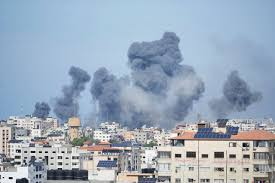


Historical Context of the Israel-Gaza Conflict

The Israeli-Palestinian conflict dates back more than a century, with roots in territorial disputes, national identities, and colonial legacies. Gaza, a small coastal strip, became a flashpoint of conflict after the 1948 Arab-Israeli War. Following the 1967 Six-Day War, Israel occupied Gaza and the West Bank, an action condemned by much of the international community. In 2005, Israel withdrew its settlers and military from Gaza, but it has maintained a blockade since 2007, when Hamas took control of the area.

The decades of tension, intermittent wars, and cycles of violence between Israel and Hamas have had a devastating impact on civilians. Israel justifies its military actions as self-defense, while Palestinians and their supporters argue that these operations constitute illegal invasions of sovereign territory, exacerbating the suffering of the people in Gaza.


Legal Perspectives on the Invasion

The legality of Israel's military actions in Gaza is a deeply contested issue. According to international law, the right to self-defense is enshrined in Article 51 of the United Nations Charter. Israel often invokes this right in response to rocket fire and attacks from Hamas. However, many international observers argue that Israel’s disproportionate use of force, including ground invasions, airstrikes, and siege tactics, violates principles of proportionality and distinction under international humanitarian law.

The ongoing blockade, restrictions on movement, and frequent military interventions are viewed by some as collective punishment, which is illegal under the Fourth Geneva Convention. Numerous UN resolutions have called for Israel to cease its occupation and stop military incursions into Gaza, but these have largely gone unheeded, further complicating the legal standing of Israel’s actions.


Humanitarian Concerns and Civilian Casualties

One of the most troubling aspects of Israel’s military operations in Gaza is the humanitarian toll. The densely populated enclave is home to over two million people, many of whom live in dire conditions exacerbated by the ongoing blockade. Each military incursion leads to civilian casualties, destruction of infrastructure, and worsening of an already critical humanitarian situation.

Hospitals, schools, and residential buildings have been repeatedly targeted or caught in the crossfire, raising serious questions about Israel’s adherence to international humanitarian law. The United Nations and human rights organizations have documented numerous instances of civilian deaths and the destruction of essential infrastructure, making it harder for Palestinians in Gaza to access medical care, clean water, and basic necessities.


The Broader Global Impact

The repeated military actions in Gaza have far-reaching consequences beyond the region. They fuel anti-Israel sentiment across the world and strengthen the resolve of extremist groups, which use the suffering of Palestinians as a rallying cry. Meanwhile, diplomatic efforts to broker peace continue to falter, with the international community deeply divided over how to address the conflict. Some nations strongly back Israel's right to defend itself, while others condemn what they see as clear violations of international law.

In addition, the plight of Gazans has sparked solidarity movements across the globe. Protests against the invasion, calls for boycotts of Israeli products, and campaigns for Palestinian statehood have gained significant momentum. On the other hand, Israel’s staunchest allies, particularly the United States, have stood firm in supporting Israel’s security measures, making it difficult to reach a global consensus on the way forward.


Conclusion

The “illegal invasion” of Gaza remains a highly contentious issue in international politics. While Israel claims to be acting in self-defense, critics argue that the scale and nature of its military actions violate international law and cause disproportionate harm to civilians. What is undeniable is that the people of Gaza continue to suffer, caught in the crossfire of a conflict that has been left unresolved for far too long.

The question remains: Can there be a solution that upholds the rights and security of both Israelis and Palestinians? For peace to prevail, a lasting resolution based on justice, respect for human rights, and adherence to international law is urgently needed. Until then, Gaza will continue to bear the brunt of a seemingly endless cycle of violence.


Saturday, October 19, 2024

The Real Reasons why Gaddafi was ki!!ed


  1. Libya had no electricity bills, electricity came free of charge to all citizens. 
  2. There were no interest rates on loans, the banks were state-owned, the loan of citizens by law 0%.  
  3. Gaddafi promised not to buy a house for his parents until everyone in Libya owns a home.  
  4. All newlywed couples in Libya received 60,000 dinars from the government & because of that they bought their own apartments & started their families.  
  5. Education & medical treatment in Libya are free. Before Gaddafi there were only 25% readers, 83% during his reign  
  6. If Libyans wanted to live on a farm, they received free household appliances, seeds and livestock.  
  7. If they cannot receive treatment in Libya, the state would fund them $2300+ accommodation & travel for treatment abroad.  
  8. If you bought a car, the government finances 50% of the price.  
  9. The price of gasoline became $ 0.14 per liter.  
  10. Libya had no external debt, and reserves were $150 Billion (now frozen worldwide)  
  11. Since some Libyans can't find jobs after school, the government will pay the average salary when they can't find a job.  
  12. Part of oil sales in Libya are directly linked to the bank accounts of all citizens.  
  13. The mother who gave birth to the child will receive $5000  
  14. 40 loaves of bread cost $0.15.  
  15. Gaddafi has implemented the world's biggest irrigation project known as the "BIG MAN PROJECT" to ensure water availability in the desert.

Dear Flat Earthers . . .

There is no scientifically credible evidence to prove that the Earth is flat. The overwhelming consensus in the scientific community, backed by centuries of research and observation, confirms that the Earth is an oblate spheroid (nearly spherical but slightly flattened at the poles and bulging at the equator). Here are some well-established pieces of evidence that debunk the flat Earth theory and support the Earth's round shape:


1. Photographs from Space:

   - Satellites, space missions, and the International Space Station (ISS) have taken countless photos and videos of Earth from space. These images consistently show Earth as a round, spherical object. Since the 1960s, images such as the famous "Blue Marble" photograph taken during the Apollo missions clearly show the Earth's curvature. These images are direct, visual evidence of Earth's shape.


2. Lunar Eclipses:

   - During a lunar eclipse, the Earth moves between the Sun and the Moon, casting a shadow on the Moon. This shadow is always round, regardless of where the eclipse occurs or the angle of the Sun. Only a spherical object can cast a round shadow in all orientations. If Earth were flat, its shadow would appear differently depending on the position of the Sun and Moon.


3. Gravity:

   - Gravity pulls equally from all sides toward the Earth's center of mass. For a large object like Earth, this force results in a nearly spherical shape because it minimizes energy. If Earth were flat, gravity would act differently across its surface, with objects not falling directly "downward" everywhere. For example, people far from the center would experience a strange sideways pull, which does not happen in reality.


4. Horizon and Curvature:

   - From ground level, the horizon appears flat, but as you gain altitude, the Earth's curvature becomes more evident. From high altitudes, such as from an airplane or atop a tall mountain, the horizon curves slightly downward. This curve becomes more pronounced the higher you go. Additionally, when ships disappear over the horizon, they first vanish from the bottom up, another indication of the Earth's curvature.


5. Time Zones:

   - If the Earth were flat, everyone on the planet would experience sunrise and sunset at the same time. However, we have different time zones because the Earth is round and rotates on its axis. As one side of the Earth faces the Sun, it experiences daylight, while the other side, facing away from the Sun, experiences nighttime. This phenomenon is only possible on a spherical object.


6. Airplane Flight Paths:

   - Airplane routes are planned using the shortest distance between two points on a globe, called a great circle route. For example, flights from North America to Asia often take routes over the Arctic, which wouldn’t make sense if the Earth were flat. These paths are shorter on a round Earth, reducing travel time and fuel consumption. This routing confirms Earth's spherical nature.

Large number names up to the largest commonly used terms

1. One (1)

2. Ten (10)

3. Hundred (100)

4. Thousand (1,000)

5. Ten Thousand (10,000)

6. Hundred Thousand (100,000)

7. One Million (1,000,000)

8. Ten Million (10,000,000)

9. Hundred Million (100,000,000)

10. One Billion (1,000,000,000)

11. Ten Billion (10,000,000,000)

12. Hundred Billion (100,000,000,000)

13. One Trillion (1,000,000,000,000)

14. Ten Trillion (10,000,000,000,000)

15. Hundred Trillion (100,000,000,000,000)

16. One Quadrillion (1,000,000,000,000,000)

17. Ten Quadrillion (10,000,000,000,000,000)

18. Hundred Quadrillion (100,000,000,000,000,000)

19. One Quintillion (1,000,000,000,000,000,000)

20. Ten Quintillion (10,000,000,000,000,000,000)

21. Hundred Quintillion (100,000,000,000,000,000,000)

22. One Sextillion (1,000,000,000,000,000,000,000)

23. Ten Sextillion (10,000,000,000,000,000,000,000)

24. Hundred Sextillion (100,000,000,000,000,000,000,000)

25. One Septillion (1,000,000,000,000,000,000,000,000)

26. Ten Septillion (10,000,000,000,000,000,000,000,000)

27. Hundred Septillion (100,000,000,000,000,000,000,000,000)

28. One Octillion (1,000,000,000,000,000,000,000,000,000)

29. Ten Octillion (10,000,000,000,000,000,000,000,000,000)

30. Hundred Octillion (100,000,000,000,000,000,000,000,000,000)

31. One Nonillion (1,000,000,000,000,000,000,000,000,000,000)

32. Ten Nonillion (10,000,000,000,000,000,000,000,000,000,000)

33. Hundred Nonillion (100,000,000,000,000,000,000,000,000,000,000)

34. One Decillion (1,000,000,000,000,000,000,000,000,000,000,000)

It continues with Undecillion, Duodecillion, and so on. For practical purposes, Decillion is where most common large-scale use tends to stop. Beyond that, numbers become increasingly theoretical or used in specific scientific contexts.

Friday, October 18, 2024

Why Jerusalem is Important

Jerusalem holds deep significance for multiple religious traditions and has been a focal point of faith, history, and politics for thousands of years. Its importance stems primarily from its role in the three major monotheistic religions: Judaism, Christianity, and Islam.


For Jews, Jerusalem is the holiest city. It was the site of the First and Second Temples, the latter of which was destroyed by the Romans in 70 CE. The Western Wall, a remnant of the Second Temple, remains one of the most sacred places in Judaism, symbolizing the Jewish people’s connection to their ancient heritage and their enduring hope for restoration.


In Christianity, Jerusalem is central because it is where Jesus Christ was crucified, buried, and resurrected, events that are foundational to Christian faith. The Church of the Holy Sepulchre, built on the site believed to encompass both Jesus’ crucifixion (Golgotha) and tomb, is one of the most revered pilgrimage destinations for Christians worldwide.


Islam also considers Jerusalem highly significant. It is home to the Al-Aqsa Mosque, the third holiest site in Islam. Muslims believe that the Prophet Muhammad was transported from Mecca to Jerusalem during the Night Journey, from where he ascended to heaven. This event gives the city profound religious importance in Islamic tradition.


Beyond its religious importance, Jerusalem has been a center of historical and political conflict for centuries. Its status is a key issue in the Israeli-Palestinian conflict, with both sides claiming it as their capital. For many, Jerusalem symbolizes not only faith but also the hope for peace in the region.


In essence, Jerusalem is a city where history, faith, and politics intertwine, making it one of the most significant places on earth.

Why Platform X is Better Than Facebook

In today’s digital age, people have more social media options than ever before, and many are turning away from Facebook to newer platforms like X (formerly Twitter). While Facebook remains a giant in the social media space, X offers several advantages that make it a better choice for many users.


One key reason is the real-time nature of X. Unlike Facebook, which emphasizes long-form content and posts that may get lost in endless newsfeeds, X thrives on short, instant updates. This makes it ideal for those who want to stay informed on current events, trending topics, or live commentary as things happen. Users can quickly engage with breaking news and discussions, making X a go-to platform for up-to-the-minute information.


X also offers a more dynamic environment for interaction. Its open nature allows users to follow anyone and join conversations without being restricted by friend requests or strict privacy settings, which can often create an echo chamber on Facebook. This openness fosters diverse viewpoints and encourages more spontaneous, global conversations.


In addition, X’s simplicity and minimalism appeal to users who prefer a clutter-free experience. Without the numerous features like Facebook’s groups, events, and marketplace, X remains streamlined for its primary purpose—engaging in conversations.


Overall, while Facebook may still be popular for personal connections, X stands out for its real-time interaction, openness, and simplicity, making it a better option for many social media users.